
http://www.therwandan.com/blog/no-economic-miracle-in-rwanda-says-the-world-bank/
No Economic miracle in Rwanda, says the World Bank
August 16, 2015 23:50 Economy
In June 2015, the World Bank published the 8th edition of its "Rwanda Economic Update" titled "Financing Development; The role of a Deeper and More Diversified Financial Sector". The report was hyped by the Rwandan governmental press as vindicating the economic success of Rwanda. Economic success in itself -again according to pro-Kagame press- would be enough to justify removing terms limits established by Rwanda's constitution and allow Paul Kagame to stay in power for 30 years and beyond. Whether economic success provides legitimacy to changing constitution and extending term limits is controversial and poorly substantiated by empirical evidence. 1
But let's actually focus on the economic success story and read the World Bank report, which I suspect very few people did, often limiting themselves to glancing through the press release. For those not familiar with this kind of reports, let s first say that the World Bank -and the IMF for that matter- rarely produces its own statistics. Most of the time it analyzes data provided by governments. This is the case in Rwanda, where the Government has a long history of keeping extensive and detailed administrative records bordering often to extensive surveillance of its own citizens.
So what does the report say? In a nutshell there is no economic miracle in Rwanda… worse, Rwanda's recovery after the 1994 genocide is fragile and unsustainable.
First, according to this 2015 World Bank report "The comparison between Rwanda and the rest of the world (low and middle income countries) shows that Rwanda lags behind other countries in most key indicators" (page 2, Table 1.1). The income per capita of Rwanda is US$630 per capita, "Rwanda ranking 112th out of 129 countries".
Second, Rwanda's exports are very low and the country increasingly struggles to pay for its imports "The balance of payments (BoP), summarizing an economy's transactions with the rest of the world, significantly deteriorated in 2014. Current account deficits deteriorated from 7.4 percent of GDP in 2013 to 11.8 percent in 2014, the worst since at least 1998" ( page 3, figure 1.2) "the deterioration of the current account in 2014 made Rwanda the worst among EAC countries " (page 9) This leads to the slide of the Rwandan Franc and emerging dollarization of the economy. 2
Third, Rwanda lives above its means and fiscal deficit is getting larger. '"The overall deficit (including grants) is projected to increase from 3.1 percent of GDP in the approved budget to 5.2 percent in the revised budget" (page 20, Table 1.12) Tax revenue remains very low. "On revenues, in the first half of 2014/2015 fiscal year, tax revenues were Rwf 406 billion (14.5 percent of GDP) falling short of planned revenues (Rwf 416 billion or 14.9 percent of GDP)". "The combination of the dominance of public investment and low domestic revenues (tax to GDP rate at 13.7 percent) shows high reliance on aid"
Fourth, private sector led growth in Rwanda is a myth. Despite the public relations efforts at portraying Rwanda as a business destination and contrary to what Rwanda's high rank in the Doing Business report would lead us to expect, Rwanda does not attract private investors. "private investment as a share of GDP is by far the lowest among EAC countries" far behind Kenya, Tanzania, and Uganda." private investment (8.1 percent of GDP) and Foreign Direct Investment (FDI) (1.5 percent of GDP) were less than half of the average "of low and middle income countries. (Annex note 1) "Uganda seems to have better economic prospects. Uganda attracted higher private investment and FDI " "Rwanda's domestic saving rate in the 2010s is 10 percentage points lower than region's best performers: Ethiopia, Tanzania and Uganda" (Figure 2.4).
Fifth, Net Official Development Assistance (ODA) has been declining and is now back to its 2007 level. "Grant aid inflows in 2014 fell to US$277 million, the lowest since 2007 (US$259 million). In terms of the share in GDP, it fell to 3.5 percent,the lowest rate since 1999 " (Fig 1.14, p 11 ). This is related to donors increasingly being questioned about their support to the violent Kagame leadership and its destabilizing effect on Rwanda and its neighbors. Rwanda's current regime' violations of human rights include disappearances, arbitrary jailing, torture and killings, both in Rwanda and abroad, all well documented by Amnesty International, Human Rights Watch, the UN and the US State Department. 3, 4, 5, 6 .
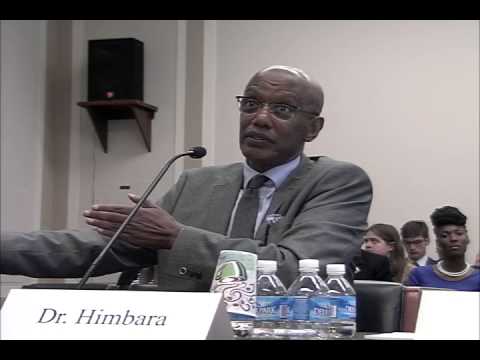
Finally economic growth, which used to be strong until 2012 slowed down in 2013 to 4.7% and was expected to remain moderate in 2014. "This time last year, we estimated the 2014 growth rate at 5.7 percent. Against all odds, the economy grew by 7 percent. However, growth outlook is not entirely bright." The World Bank takes note of the Government of Rwanda's revised 2014 growth rate "against all odds" but does not seem convinced by this new unexpected figure, particularly as growth declined in the 3d and 4th quarter 'quarterly growth declining'. (Figure 1.5, page 5) In fact the World Bank signals here in coded language that the reliability of the official 2014 economic growth numbers given by the Government is questionable: 'The actual growth rate, of 7 percent in 2014…higher than our projection of 5.7 percent in August 2014." Experts were already suspicious about the results of the most recent poverty (EICV) and health (DHS) survey. Earlier in the year, David Himbara, previously economic advisor to the Presidency testified in the US congress that economic statistics in Rwanda are often falsified following President Kagame's instructions. 7
Overall, the World Bank portrays Rwanda's economy in 2014 as the second weakest in the Eastern African Community, slightly above Burundi. Looking forward it expresses concerns on the economic prospects of Rwanda's economy "According to the latest debt sustainability analysis (DSA), in late 2014, it became apparent that external grants, as a share of GDP are projected to decline from 8.6 percent in 2013 to 3.3 percent in 2018.. In other words, all things being equal, in order to maintain the same level of investment, alternative financing sources amounting about 5 percent of GDP will have to be found".
So where does this lead us? What we hear from the Kigali inner circle is that the particular brand of prudent and visionary macro-economic management Donald Kaberuka had established in Rwanda has been abandoned. The Government of Rwanda is now busy at controlling its populace through an increasingly violent hand, upgrading its public relation effort at selling Paul Kagame as the nation's sole leader, and destabilizing Burundi to keep control of mineral resources in the region. This will be the story for the months to come and Rwanda's Government will likely increasingly falsify its economic statistics to fit its propaganda. But if there ever was one, there is no longer any economic miracle in Rwanda.
Francois Gatete
————————————————————————
1 Recently Prof. Angus Deaton of Princeton University created controversy by applying Singer's utilitarian theory to aid and Rwanda. Let's just simply refer to one historic example. The Nazi regime's propaganda portrayed Germany as an economic and social success. In 1938, Germany indeed had some of the best economic, education and health indicators in Europe. We know the end of the story.
http://bostonreview.net/forum/logic-effective-altruism/angus-deaton-response-effective-altruism
http://bostonreview.net/forum/logic-effective-altruism/angus-deaton-response-effective-altruism
5 DRC UN Mapping Report DRC: Mapping human rights violations 1993-2003
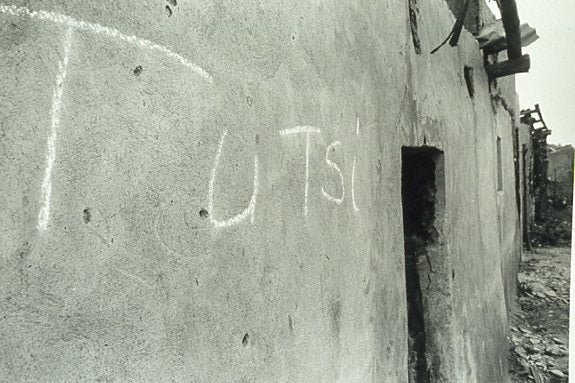 | |||||||
World Report 2015: Rwanda The 20th anniversary of the 1994 genocide was commemorated in ceremonies and other events across Rwanda, and in many other countries. | |||||||
Preview by Yahoo | |||||||


###
"Hate Cannot Drive Out Hate. Only Love Can Do That", Dr. Martin Luther King.
__._,_.___
Posted by: Nzinink <nzinink@yahoo.com>
| Reply via web post | • | Reply to sender | • | Reply to group | • | Start a New Topic | • | Messages in this topic (1) |
----------------------------------------------------------------------------------------------------------
The hate of men will pass, and dictators die, and the power they took from the people will return to the people. And so long as men die, liberty will never perish.
I have loved justice and hated iniquity: therefore I die in exile.
The price good men pay for indifference to public affairs is to be ruled by evil men.
When the white man came we had the land and they had the bibles; now they have the land and we have the bibles.
----------------------------------------------------------------------------------------------------------
The Voice of the Poor, the Weak and Powerless.
-----------------------------------------------------------
Post message: AfricaRealities@yahoogroups.com
Subscribe: AfricaRealities-subscribe@yahoogroups.com
Unsubscribe: AfricaRealities-unsubscribe@yahoogroups.com
List owner: AfricaRealities-owner@yahoogroups.com
__________________________________________________________________
Please consider the environment before printing this email or any attachments.
---------------------------------------------------------------------------------------------------------------------
-http://www.africarealities.com/
-https://www.facebook.com/africarealities
-----------------------------------------------------------------------------------------
-New International Scholarships opportunities: http://www.scholarshipsgate.com
-----------------------------------------------------------------------------------------------
Find Friends in Africa:
http://www.africanaffection.com
http://www.datinginafrica.com/
http://www.foraha.net
https://www.facebook.com/onlinedatinginafrica
The hate of men will pass, and dictators die, and the power they took from the people will return to the people. And so long as men die, liberty will never perish.
I have loved justice and hated iniquity: therefore I die in exile.
The price good men pay for indifference to public affairs is to be ruled by evil men.
When the white man came we had the land and they had the bibles; now they have the land and we have the bibles.
----------------------------------------------------------------------------------------------------------
The Voice of the Poor, the Weak and Powerless.
-----------------------------------------------------------
Post message: AfricaRealities@yahoogroups.com
Subscribe: AfricaRealities-subscribe@yahoogroups.com
Unsubscribe: AfricaRealities-unsubscribe@yahoogroups.com
List owner: AfricaRealities-owner@yahoogroups.com
__________________________________________________________________
Please consider the environment before printing this email or any attachments.
---------------------------------------------------------------------------------------------------------------------
-http://www.africarealities.com/
-https://www.facebook.com/africarealities
-----------------------------------------------------------------------------------------
-New International Scholarships opportunities: http://www.scholarshipsgate.com
-----------------------------------------------------------------------------------------------
Find Friends in Africa:
http://www.africanaffection.com
http://www.datinginafrica.com/
http://www.foraha.net
https://www.facebook.com/onlinedatinginafrica

.


__,_._,___
Comments
Post a Comment