Your daily selection of IRIN Africa English reports, 1/14/2015

 
humanitarian news and analysis


CAR data - a crisis in numbers

BANGUI, 12 January 2015 (IRIN) - Over the last year, violence has continued across the Central African Republic (CAR) despite multiple cessations of hostilities agreements and attempts to end the conflict. IRIN looks at the impact of the internal conflict in numbers.
Read report online


Boko Haram and Nigeria's future - five key questions answered*

NAIROBI, 13 January 2015 (IRIN) - The terrible news keeps on coming from Nigeria's embattled northeast. Two suspected child suicide bombers reportedly blew themselves up in a crowded market on Sunday – the second such attack in two days linked to Boko Haram in which young girls were strapped with explosives. Meanwhile, the Islamic extremist group has maintained the momentum of its more conventional attacks, capturing the town of Baga last week on the border with Chad and deliberately executing civilians (earlier reports of up to 2,000 dead by Amnesty International have been disputed by the military. But the true figure remains unknown).
Read report online


Uneven Distributions: What we talk about when we talk about Ebola

LONDON, 13 January 2015 (IRIN) - In the first of IRIN's "Open Forum" guest columns humanitarian consultant Paul Currion asks what it would take to keep the public's attention on Ebola.
Read report online


Heading to The Hague - Uganda reacts to surrender of top LRA man

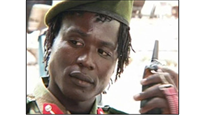
KAMPALA, 14 January 2015 (IRIN) - Some want him tried in The Hague; others in Kampala. Others still say he should receive an amnesty for his alleged crimes against humanity. Top rebel commander Dominic Ongwen was abducted into a Ugandan insurgency at the age of 10. His surrender earlier this month is eliciting very mixed feelings from his compatriots.
Read report online


Copyright © IRIN. All rights reserved. Details: http://www.irinnews.org/copyright

Comments

Popular posts from this blog

Pourquoi les sanctions américaines contre le Rwanda sont-elles si importantes ?

Pourquoi les sanctions américaines contre le Rwanda sont-elles si importantes ? Auteur : The African Rights Campaign. Londres, Royaume-Uni Publié en : mars 2026   Introduction Lorsqu'un gouvernement est accusé d'exécutions extrajudiciaires, de déplacements massifs, de violences sexuelles, de violations des droits de l'homme et du pillage systématique des ressources naturelles d'un pays voisin, la réponse diplomatique attendue est un démenti catégorique, étayé par des preuves. Le Rwanda ne l'a pas fait. Lorsque le département américain du Trésor a imposé des sanctions aux Forces de défense rwandaises (FDR) et à quatre de leurs commandants les plus haut placés, le 2 mars 2026, la porte-parole officielle de Kigali, Yolande Makolo, a délivré une déclaration que les analystes diplomatiques étudieront attentivement pour ce qu'elle omet conspicuement. Elle a dit que les sanctions étaient « injustes », qu'elles ciblaient « uniquement...

Le Rwanda au Mozambique : qui les a placés là, pourquoi ils ne peuvent pas rester et pourquoi la SADC doit les remplacer avant que les dégâts ne deviennent permanents

  Qui a placé le Rwanda là-bas, pourquoi la France refuse de le remplacer, comment le déploiement est devenu un bouclier contre les sanctions, et pourquoi la SADC doit agir avant que les dégâts ne deviennent permanents Mars 2026   Résumé exécutif Les sanctions occidentales contre les Forces de Défense du Rwanda (RDF), imposées par les États-Unis le 2 mars 2026 en vertu du Global Magnitsky Act et relayées par une pression croissante de l'Union européenne, ont mis à nu une contradiction stratégique de premier ordre. La même force militaire sanctionnée pour son soutien opérationnel direct au groupe rebelle M23 en République démocratique du Congo est simultanément le principal garant sécuritaire d'un projet de gaz naturel liquéfié (GNL) de 20 milliards de dollars exploité par le géant français TotalEnergies à Cabo Delgado, dans le nord du Mozambique. Cette analyse répond à trois questions interconnectées dont les réponses définissent ...

Why US Sanctions Against Rwanda Are So Important

Why US Sanctions Against Rwanda Are So Important Author: The African Rights Campaign. London, UK Published: March 2026   Introduction When a government is accused of extrajudicial killings, mass displacement, sexual violence, human rights abuses, and the systematic pillage of another country's mineral resources, the expected response in international diplomacy is an unequivocal denial backed by evidence. Rwanda did not do that. When the United States Department of the Treasury imposed sanctions on the Rwanda Defence Force (RDF) and four of its most senior commanders on 2 March 2026, Kigali's official spokesperson Yolande Makolo made a statement that diplomatic analysts will study carefully for what it conspicuously omitted. She said the sanctions were 'unjust,' that they targeted 'only one party to the peace process,' and that they 'misrepresent the reality and distort the facts.' Rwanda's government, described by Bloomb...

BBC News

Africanews

UNDP - Africa Job Vacancies

How We Made It In Africa – Insight into business in Africa

Migration Policy Institute