
Fw: [uRwanda_rwacu] Paul Rusesabagina: UAE denies knowledge of Hotel Rwanda film hero's arrest - CNN
UAE denies knowledge of Hotel Rwanda film hero's arrest as family raise 'kidnap' fears
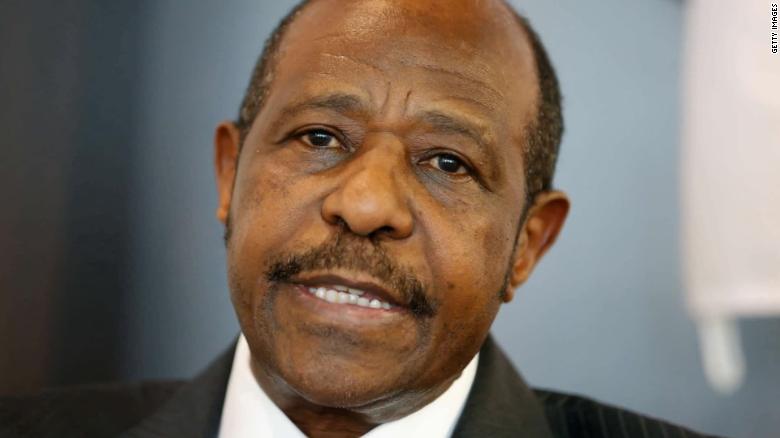
(CNN) — The United Arab Emirates has denied any involvement in the arrest of Hotel Rwanda film hero Paul Rusesabagina, saying he left Dubai legally last Friday on a private jet bound for the East African country.
After landing in Dubai on Thursday, Rusesabagina went to a hotel, said the official, before taking off five hours later from Al Maktoum airport just after midnight.
"Mr. Paul came and left legally," the UAE official told CNN.
A longtime critic of President Paul Kagame's rule, his travel immediately raises questions why he got on the jet, knowing he would face charges in Rwanda.
Days after his departure from Dubai, the 66-year-old human rights activist surfaced in Rwanda, paraded in handcuffs, facing terror related charges.
A spokesman for the Rwanda Investigation Bureau (RIB) Thierry Murangira, speaking from Kigali, would not go into details about how and where Rusesabagina was apprehended, saying that he has to answer "charges of serious crime.."
"This was done with international cooperation subject to an international arrest warrant," he said.
However, the UAE official confirmed that there is no agreement between the Gulf state and Rwanda to extradite criminals or wanted people.
They said that Rusesabagina had visited Dubai twice in the last few years and that he raised no suspicions from authorities in the UAE, because he wasn't on any wanted lists.
The RIB did not respond to queries about the apparent discrepancies.
Family kidnap fears
Rusesabagina's family told CNN that they believe he was kidnapped, but have no proof of this.
The new information coming from the UAE deepens the mystery of his arrest and raises new questions about claims made by Rwandan authorities.
Rusesabagina, travelling on his own, arrived in Dubai on an Emirates flight from Chicago last Thursday evening, said the official.
Sometime that same evening Rusesabagina checked in by phone with his wife and daughter, the family told CNN.
"That is the last time we talked to him, that is the last time we heard from him and ever since, it has just been silence," said his son, Trésor Rusesabagina.
He said he was surprised that his father had even ventured to the UAE.
Though his father did travel extensively, he had recently curtailed his trips because of the pandemic, and the family had long feared the formidable intelligence network of the Rwandan government.
"I was shocked to hear he was in Dubai, that he was anywhere near Africa," he said.
Rwandan agents have regularly followed Paul Rusesabagina for over a decade, invading his home and threatening his life, they claimed.
His family are also concerned for his health because he is a cancer survivor and heart patient who requires daily medication.
They have not had contact with him since his disappearance and have requested to visit him immediately.
The RIB and Rwandan leadership figures said earlier that the charges that Rusesabagina faces are unrelated to politics.
The RIB says he is accused of supporting terror groups, calling for violence, and involvement in specific acts of terror.
Pressed on those specifics, on Tuesday RIB spokesperson Murangira told CNN that the investigation centered around alleged crimes against civilians in two Rwandan districts in June and December 2018.
Murangira said that an investigator has 15 days to determine whether Rusesabagina should stay in custody, that he has the right to a lawyer, and the right to speak to his family.
Around 800,000 Tutsis and moderate Hutus were killed in the Rwandan genocide, which was led by Hutu extremists.
Opposition voices silenced
Rusesabagina also holds Belgian citizenship and a US Green Card, says his family and foundation. A US State Department official told CNN that they are aware of his arrest and are monitoring the situation.
He has not lived in Rwanda since 1996, when he survived an assassination attempt.
While widely praised for transforming Rwanda in the aftermath of the genocide, Kagame has also faced widespread criticism for human rights abuses and silencing opposition voices.
Opposition politicians in Rwanda have often found themselves jailed on what they say are trumped-up charges for standing against Kagame in polls.
In one of the more widely publicized cases, Diane Rwigara and her mother were jailed when the former attempted to run for president in the same election as Kagame in 2017.

Victoire Ingabire, the leader of the FDU-Inkingi party, was jailed in 2010 for charges that included collaborating with a terrorist organization, "divisionism," "minimizing the genocide" and "genocide ideology."
She had returned to the country from the Netherlands to contest in the 2010 presidential elections after years of living abroad but was barred from running, and served eight years of a 15-year prison sentence before receiving a presidential pardon in 2018.
CNN's Stephanie Busari and Eoin McSweeney contributed to this report.

Comments
Post a Comment