
"Ndi Umunyarwanda" or an unnecessary dichotomy in Rwandan politics
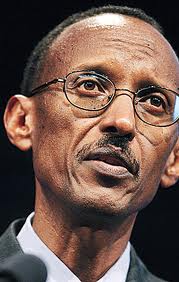
Rwandan president Paul Kagame – Time picture
Dichotomy is defined as a division or contrast between two things that are or are represented as being opposed or entirely different.
"Ndi Umunyarwanda" is a Rwandan sentence meaning "I am Rwandan" but the expression also defines a current government programme.
In today's Rwandan politics, especially after the military defeat of M23 by the FARDC, "Ndi Umunyarwanda" is a national initiative being forcibly implemented across the country at a worrying pace without any prior consultation of the population. Sorry, as if there can be any under a dictatorship.
According to the Rwandan Patriotic Front's authorities, at least as this was last week explained on a national radio by the vice president of the organization, namely Christophe Bazivamo, the programme is a continuation of another one announced by the Rwandan president Paul Kagame on June 30th 2013.
This was during a Youth Connekt conference in Kigali. He requested from all Hutu indistinctly, and especially its youth, to ask for forgiveness for the sins committed by their parents and relatives to their fellow Tutsi, this during the 1994 genocide. Obviously, the same cannot be done for the millions of Hutus fallen in the hands of RPF both in Rwanda and DRC.
Let's pause and reflect a bit here. Could we today imagine for example the present generation of Germans that came after the defeat of Adolf Hitler asking to be individually forgiven by the Jews for the crimes committed by their ancestors and fellow NAZI? Let not forget that NAZI, though in power during their time, were a tiny fraction of the Germans.
Although there are many fundamental differences between the genocides committed in Rwanda and Germany, that mentioned reference is what the Rwandan Patriotic Front of Paul Kagame is busy doing with Hutus since June 2013.
After 19 years of denying the existence of Tutsi and Hutu ethnic groups in Rwanda, it is surprising from Paul Kagame to forcibly dictate to Hutus, even those who were not born in 1994, that they have to publicly ask to their compatriots Tutsis for forgiveness for the sins committed by some of their fellow Hutus back in that national tragedy.
This policy is being rushed from top to bottom of the Rwandan administrative structures after that the Gacaca judiciary system has confined more than 1,500,000 Hutus and their entire families to a second class category of citizens.
That this government campaign moves at a serious pace as reported by the EastAfrican, apparently because many high ranking government Hutu officials lead the apology queue, this only explains that there are Hutu dignitaries who are motivated by greed and ready to preserve their selfish interests without any consideration of their attitude on present and future generations of Rwandans, both Tutsis and Hutus.
It is critical to remember that for the RPF to come to power it played the ethnic card of the Tutsis perpetual victims of the Hutus. It has persistently played it while it systematically oppressed, imprisoned, killed, deprived and discriminated the Hutu during its 19 years of power.
Presently the RPF duplicity has become well documented by everyone even those that have been heavily supporting it. Consequently, in order to remain in power, after the falsely constructive policies of national unity and reconciliation, development, Gacaca, Agaciro, land allocation, healthcare, education for all, and many more, the regime is looking into "Ndi Umunyarwanda" for its final stand for salvation before the abyss it is heading to.
The programme of Hutu apology to Tutsi is again another of the mentioned and not well intentioned policies from Paul Kagame. It is only a divisive tool to promote hatred between the two communities. It is aimed at buying the Rwandan president some time since his political image is nationally and internationally declining dangerously. As he usually says with his trademark, he does not care about the consequences of his new policy on Rwandans, as long as it enables him to achieve his personal ambitions.
Early this year, Gerard Gahima, the former Rwandan general prosecutor and one of the founders of RNC asked during a radio interview if the international community was prepared for the next Rwandan genocide. I would today confirm that the pieces of the puzzle are being brought together methodically by the same RPF structures which prepared the conditions of the 1994 one. No wonder the planners of the latter could not be found by the International Criminal Tribunal for Rwanda since the cover up continues. However, people should not be surprised if their identities will be revealed once the leader of Rwanda and his inner circle will be completely dropped by his current Western sponsors.
That senseless international community of capitalists only motivated by its selfish interests should not anymore pretend that it did not notice the preparatory signs of another human tragedy in Rwanda. For 19 years the build-up has been progressing steadily and even supported by the same capitalists. There will not be any room for apology for failing to intervene. There has been plenty instead.
Comments
Post a Comment